1. Measure what actually goes inside
Record each machine's full width, length and height in the configuration you will drive or store it. Include mirrors, buckets, loaders, exhausts and attachments. A model name alone is not enough: tyres and attachments can change the dimensions.
2. Check the doorway first
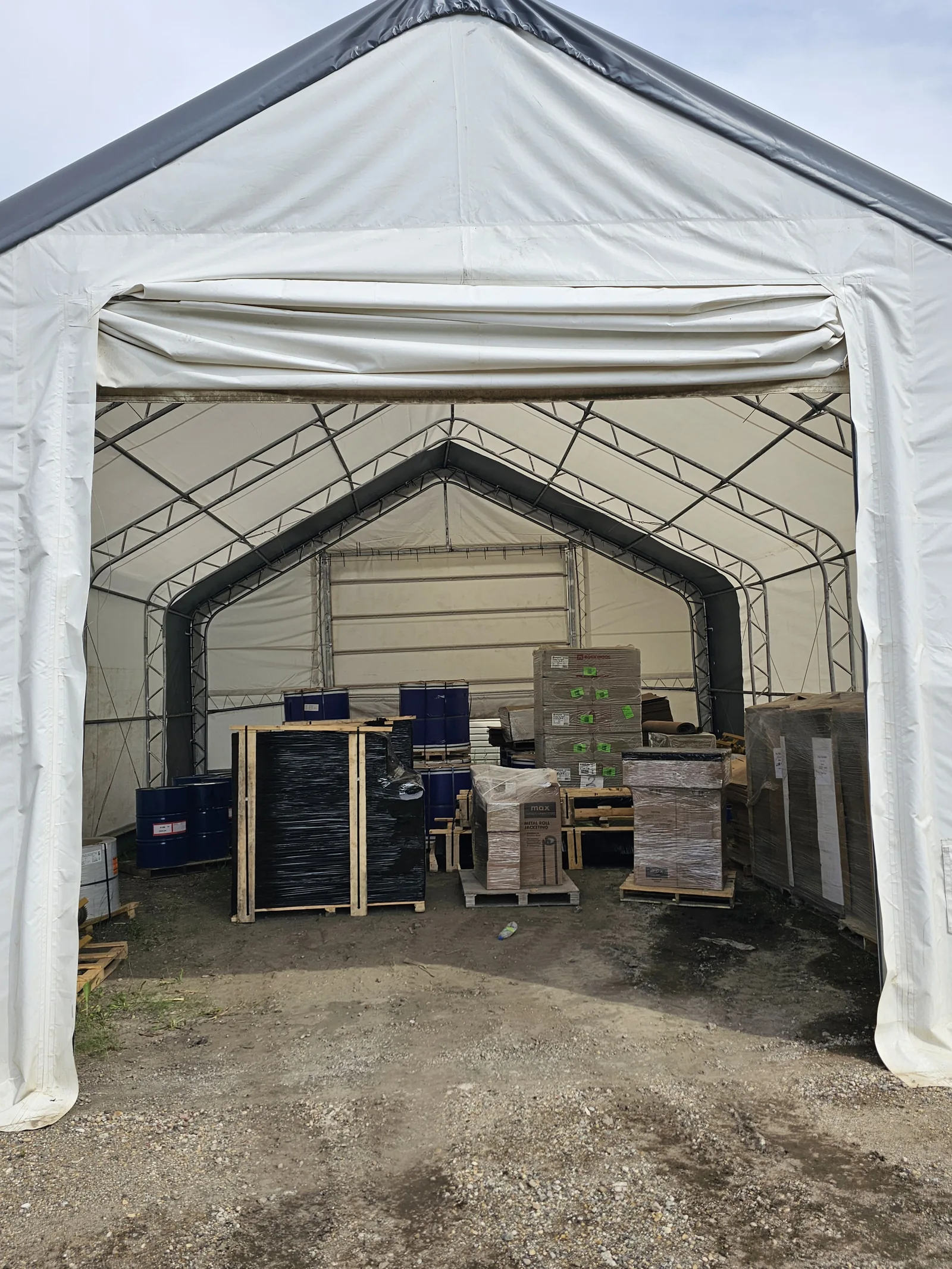
A building's advertised peak height is not its door height. Ask for usable opening clearance for the supplied configuration and compare it with your tallest and widest load. Allow for the real approach: slope, turning angle and changing equipment position can affect access.
Some product pages show a manufacturer elevation reference. That reference is a starting point, not a guarantee that a specific machine will clear every supplied opening. Ask MAX to confirm before you order.
3. Lay out the work, not just the parked machines
Leave space to walk, open cab doors, connect implements and remove a machine without moving everything else. Hay handling, servicing and loading may need more room than parked storage. Use your own operating needs to set that allowance rather than a universal percentage.
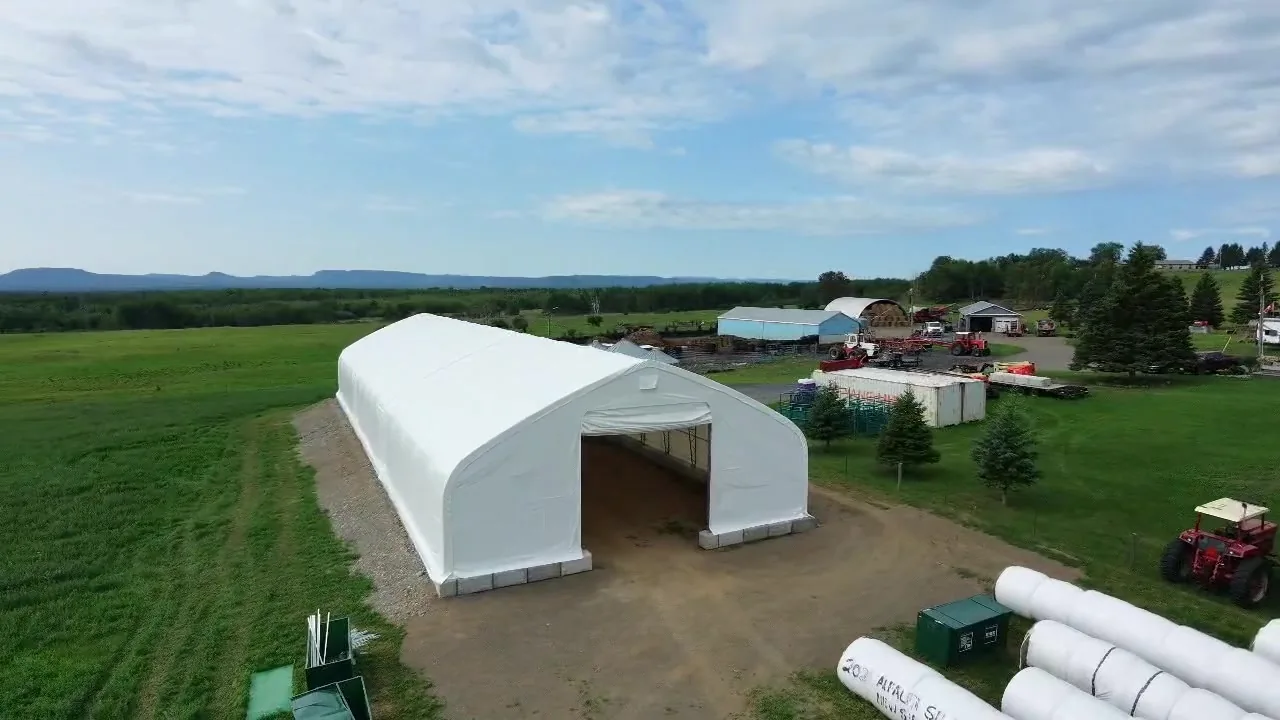
Try the space planner to explore a layout. Its equipment and building scenes are illustrative; the frame reduces usable space inside nominal sales dimensions.
4. Check clearance near the sides
The roof slopes down from the peak, and trusses occupy space. Compare the required operating height where the equipment will actually sit or move, including any raised loader or dump body. Confirm the supplied drawings and safe operating requirements.
5. Compare width, length and height separately
More length adds floor area without necessarily solving a doorway or side-clearance problem. More width can create a different aisle arrangement. A higher peak may help only where the roof profile provides usable clearance.
The 70′ series and 80′ Industrial Series differ in height, framing and cover specification as well as width. See the straightforward comparison. Check the current price table for each configuration, including the separate 70′ × 200′ × 32′ option.
6. Confirm the site and the supplied configuration
Check setbacks, access, drainage, anchoring and local permit requirements. Give MAX your measured equipment list, intended use, location and preferred layout so we can confirm the configuration and quote.